The Fraud Awareness Project - Topics
Cryto-investment fraud
To understand crypto-fraud, you don't need to understand crytpo. But there are a couple of terms you should learn.
- Crypto-currency - this is a single concept that is being fragmented and none of that fragmentation into meme-coins, stablecoins and a raft of other titles matters in our context in this article. They are simply terms that fraudsters will use to make you think you don't know much and that the fraudster can be trusted because he knows more than you.
- Crypto-assets - this is the term preferred by The International Bank for Settlements and it includes not only crypto-currency but also things like "non-fungible tokens" (NFTs) and crypto-derivatives based on smart-contracts.
See - just by using such terms, you are made to feel inadequate and either want to shut down or to find out more.
Let's find out more.
Crypto-related frauds are said to be the fastest growing fraud on messaging apps such as Telegram and on social media, such as Facebook and Instagram. Are they? Quite possibly, because there is hardly a day goes by that someone you know won't be engaged by someone trying to get him or her to "invest" in some form of crypto.
So here's the truth: there is money to be made in Crypto. Early adopters in today's well established market leaders could have made many hundreds of millions of dollars from gambling a thousand dollars 15 years ago. It is this chance that sounds so good it must be true - history and the numbers prove it, right?
Well, yes. That is what history and the numbers show, if you bought bitcoin or Ethereum all that time ago. But there are no other crypto-currencies that have risen so much and even Ethereum (the coin is called "ether" remains at a very small percentage of bitcoin.
You might think it's difficult to create a crypto-currency but it's actually very simple. That's why there are so many coins.
Many are "pre-sold" like "founders' shares" in companies. The price of these is often manipulated because they are not traded freely.
Mainstream media, like MSN, carry on their websites promotional articles boosting, or decrying, particular coins. Many are published by Taboola, a marketing network that places misleading articles in media you think you can trust.
Crypto is, in some cases, a regulated market but the dodgiest are not traded in the regulated markets. But that does not mean they cannot be bought via reputable crypto-exchanges.
The fraudsters often do not trade via those regulated markets - they create their own "platform" and you download an "app" to your phone. You have no idea what data that app is scanning your phone for - including your private financial data, payment card information and banking credentials.
And that's all before the actual fraud begins.
The fraud is simple: the fraudster often says there is a "ground floor" opportunity or that there is some private information that they will "share with" (it means "tell") you, In regulated financial markets giving, receiving and using such private information is "insider trading" and people go to jail for doing it.
So, the warning signs are easy: someone you don't know, or don't know well, tells you there is a magical opportunity to get rich for little or no effort.
That's the hook, and once you are hooked, the fraud can go in one of a variety of ways.
The purpose of this explanation is to help you avoid the hook and to get away from risk at the earliest possible stage.
SAFE WORD: NO
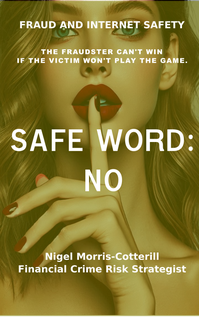
SAFE WORD: NO has one purpose: to encourage people like you to talk with your friends, family and colleagues - and those to whom you have responsibilities - to increase their awareness of fraud so as to reduce their risk.
Packed with information about fraud and how fraudsters manipulate their victims, SAFE WORD: NO is available in paperback and as "Let's Talk About Fraud" in an ebook for instant download.
Buy now
Paperback (title "Safe Word: No").
E-book (title "Let's Talk About Fraud")
More information

