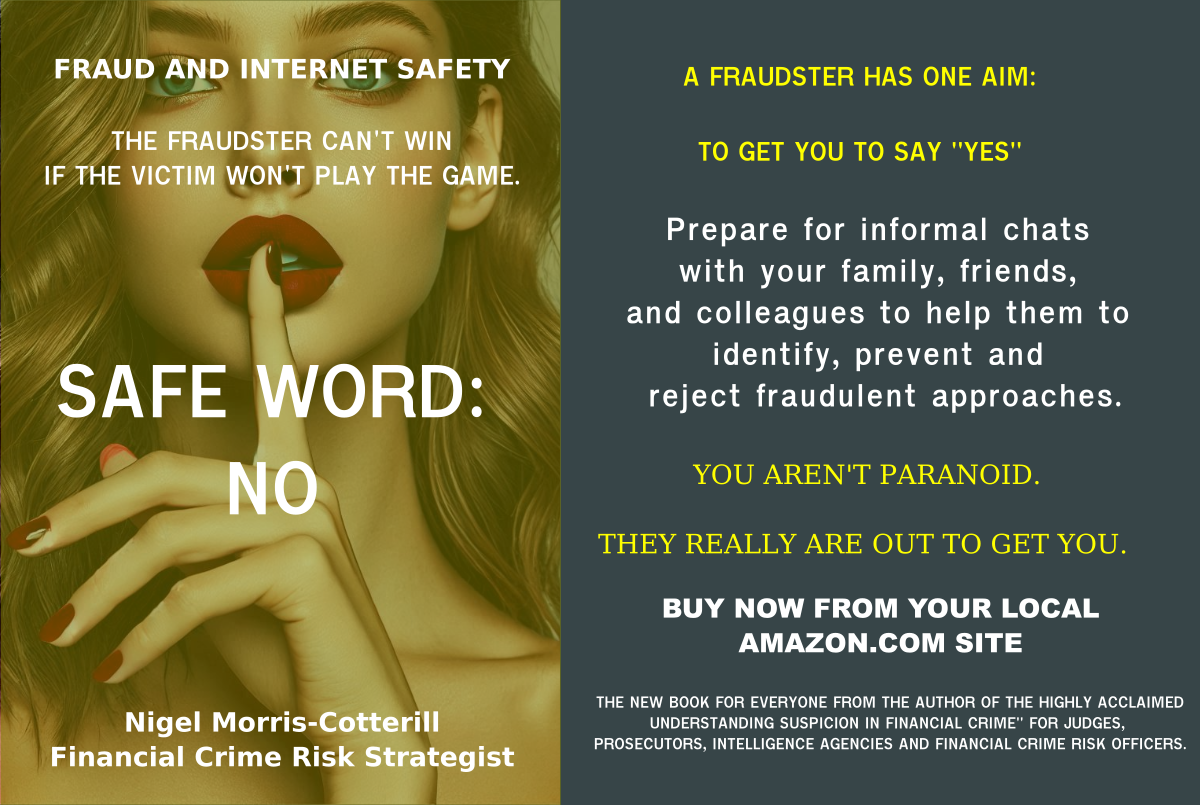
The fraudster wants you to say "yes". And it doesn't matter what you say "yes" to.
In SAFE WORD: NO, one of the central themes is that fraudsters are sales people: the difference is in the "product" not the techniques. And all sales people have one primary objective: to get the prospects used to the idea of saying "yes". It doesn't matter what they are saying "yes" to, so long as it's a yes.
Here's an example of an approach designed to engage, and to get to some form of "yes" immediately. The specific "yes" is "yes, I might be interested in that job."
It's a very non-committal "yes" . You can always say "no" later, right? After all, that's the strong implication in the approach.
Juliet Walker 3+
Director of Development at USAA
Nigel Morris-Cotterill Hey, I don’t usually reach out like this, but your profile genuinely caught my eye. Your background aligns perfectly with a hot role that just opened on our team at USAA.
The kicker? They’re closing applications within 24 hours. I couldn’t DM you, so I’m dropping this here I’d hate for you to miss it.
If you’re even slightly open, reach out to Aimee Martin (Hiring Manager) at aimeemartin@usaa-company.com ASAP. She’s reviewing candidates now, and your name deserves to be in the mix.
Sometimes the best doors open when you’re not even knocking. This could be one of those.
Ok, so let's look at this, shall we? Let's break it down so you can see where all the signs of fraud are.
First, and this will be controversial, Why did this approach appear in the comments to a post on LinkedIn? It's because the poster is so-far removed from my contacts that he/she/it cannot send me a direct message, without paying LinkedIn an up-front fee. And spam is supposed to be free to send, right? Posts from third or greater degree contacts do not appear in feeds, unless a first or second degree contact "likes" or reposts them. But comments always appear: spam and fraudulent approaches via LinkedIn comments are reaching plague proportions. LinkedIn does nothing about them.
Secondly, fraudulent messages have long included phrases like "in your country" and here that approach is perpetuated with "hot role." Any legitimate approach would specify what the job is - and where it is. It might also provide a web address and an indication of the industry.
Third, fraudulent messages often flatter. "..your profile genuinely caught my eye. Your background aligns perfectly .." OOHH. Now I feel special.
Fourthly, why would person A contact me, then ask me to contact person B at an email address that is now public. The conclusion to that is simple. that email address will be shut down soon but Bing, bless its little cotton socks, will record it, with the name, and other people will be misled and will visit the website (I haven't. I don't care if there is one). Equally, would it not have been more efficient for "Juliet Walker" to have sent an internal note to "Aimee Martin" and say "hey, this chap seems suitable for the job you are recruiting for : check his profile and if there's a fit, make contact with him."
Fifth, if the job has just "opened up" why is there just 24 hours to get an application in? This is a trick to create a sense of urgency, so I have a "fear of missing out" or FOMO.
Sixthly, it's crafted to be chummy: "in our team", "in the mix" and the one that really made me laugh "I don't usually do this." Do they think I've never been approached by a woman selling services in a hotel bar?
The final straw, seventh, is the sign-off line. Why does someone suggesting that I approach the company where he/she/it works think I need a motivational tag line? The answer is simple: tag lines sell. And all fraud is, at its heart, a sales pitch.
It gets better: let's check the domain name. The United Services Automobile Association, the real USAA, is a long-standing company but the domain in the message is only three months old:
Domain: usaa-company.com
Registered On: 2025-03-20
Expires On: 2026-03-20
Updated On: 2025-03-20
(courtesy https://www.whois.com/ - you can check domains there, too).
Now that's a kicker.