
Crypto: Tether reaches the end of its tether in the EU as it becomes a matter of national interest in the USA.
Paolo Ardoino, CEO of Tether, the issuer of the largest USDT stablecoin by capitalisation, has told journalists that Tether has no plans to adapt its USDT-pegged stablecoin to EU requirements.
Tether might be on a collision course with regulators worldwide: it has recently re-domiciled to El Salvador, a country of which the US State Department's most recent International Narcotics Control Report (here: https://www.state.gov/wp-content/uploads/2025/01/2024-INCSR-Vol-2-Money…) is very scathing. Amongst general, serious, criticisms, it says "Despite passing legislation in January 2023 to regulate all virtual assets, ineffective AML/CFT supervision heightens money laundering and terrorist financing risks."
The document is a bible for those financial crime risk officers who are building their own risk matrices. As they all should, even if only to compare what they want to what vendors are selling. And while it is not a tablet of stone, any organisation that does not take it into account may be regarded as reckless when it comes to KYC where C includes both customer and counter-party.
In the world of Crypto, a stablecoin is the myth at the end of the rainbow. For those of us who remember attempts to maintain the divers currencies in the European Community, and the infamous "snake" it's not a new concept but the execution is different. The snake allowed EC currencies to float within a determined band and if a currency threatened to go outside the band, its government was responsible for corrective action, pretentiously called "intervening in the market" but what it meant was buying or selling their own currency to bring it back within the band. The UK famously "crashed out of the snake" when support became too expensive. But actually, usually without fanfare, governments deal in their own currency all the time, as they do in the bond markets, to maintain a preferred exchange rate, usually against the USD, or even - as in the case of Hong Kong - to maintain a peg to the USD.
Here's the problem: with privately issue "stablecoins", there is no public purse to stand behind them or the crypto in their basket. Their trade price (let's not use the term "value" because we are not talking about value per se) depends on the individual prices set for a basket of crypto.
If, for example, the basket is weighted heavily in favour of one cryptocurrency, and that one falls, then the value of the basket will fall, albeit by less, unless there is systemic shock that drags down all crypto. And that can happen. It has happened.
But Tether is different again: it is pegged to the US dollar and that's a very high risk position because there is no independent way of supporting it if the price plummets.
MiCA requires, amongst other things, 60% of stablecoins reserves in insured cash deposits in European banks, according to Ardoino. That, he says, places an impossible burden not only on crypto companies but also on banks involved in Crypto. He predicts failures.
But he would say that, wouldn't he. Crypto remains a frontier activity, with many crypto companies playing regulatory arbitrage. Some will win, some will lose.
The industry is split: stay in Europe and meet the regulations or get out. Exchanges have, since the beginning of the year, been de-listing crypto that doesn't meet the MiCA requirements. That process will accelerate as the EU starts to enforce MiCA. The first stage will be for the EU to issue a white list of approved crypto: it will then become illegal to do business in any crypto not on the list. There are signs that is coming but it's not here yet.
Tether's USDT market share is, reportedly, more than 60% of the US stablecoin market and Ardoino is a fan of bitcoin. Tether reports its "assets" as worth USD150,000 million, approx. It is not unreasonable to say, therefore, that Tether is capable of moving the bitcoin market all on its own.
If a single bank had the ability to move the US Dollar, questions would be asked. If it was a foreign bank, in the sense that Tether is now a foreign financial business, those questions would start to be regarded as matters of national interest.
This is not a matter of crypto or crypto valuation or regulation: it's a matter of markets and systemic risk. With some USD120,000 million reported "exposure" to US Treasury bonds as of Q1 2025, there's a narrow band between its assets, its stake in one asset class and the risk of currency exchange risk.
It's no wonder Ardoino doesn't want to park 60% in EU banks. The business is, simply, not that liquid.
---------
Sources; various.

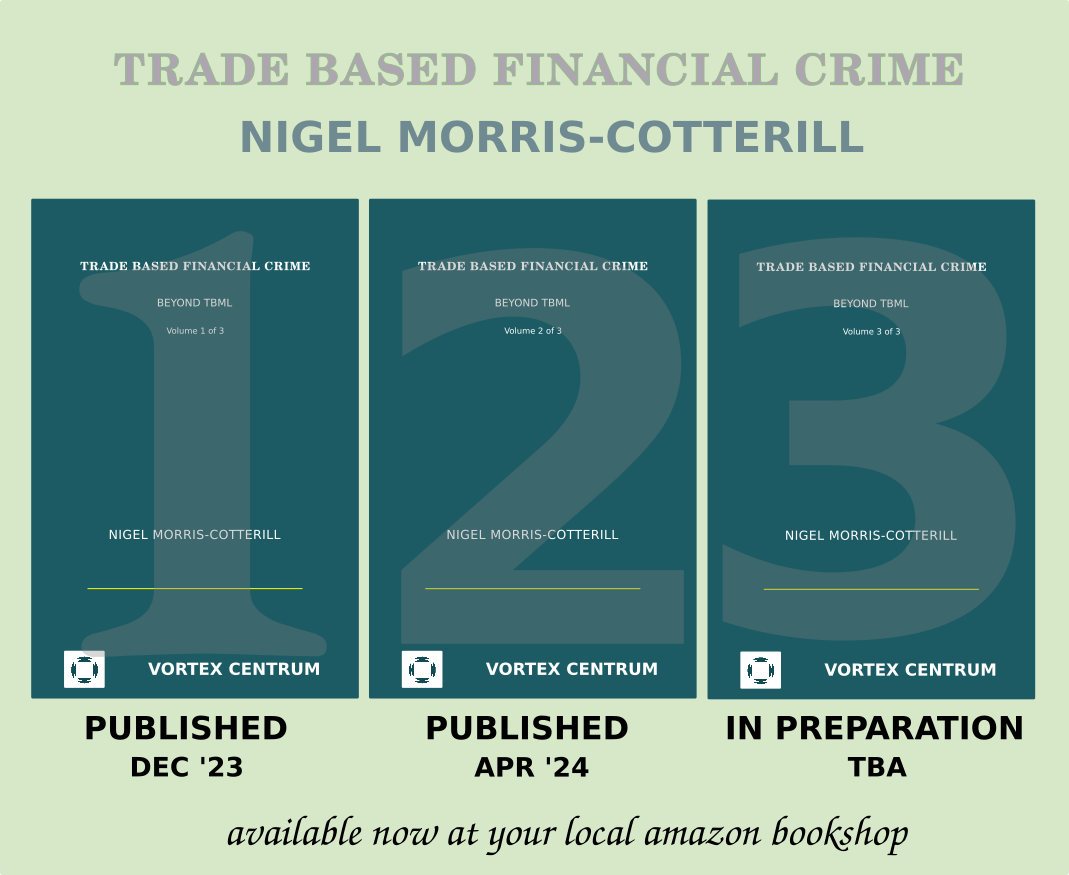
Amazon:
Vol 1 paperback: https://amzn.to/3YajAO4 Vol 1 hardback: https://amzn.to/3Gze1m4
Vol 2 paperback: https://amzn.to/3Y9GTHU Vol 2 hardback: https://amzn.to/4ixhyin

