
Morris-Cotterill: Did "Hudson and Rex" reference a fraud that brought down a financial system?

In the 1990s, a criminal decided to follow the basic rule that if criminals want to make money from a bank, the best thing to do is to own the bank.
Owning a bank was a lot easier then than now (step one - answer an advert in the back pages of The Economist and hand over USD10,000) but it still wasn't easy. So the criminal decided to create an insurance company where the regulatory barriers to entry were significantly lower. So he did that, creamed off the income and folded it. Much of the money was never recovered.
He looked around to see where he might find a bank and discovered that instead of finding one, it was better to found one and a small Caribbean Island had just decided that as neighbours were making money from the offshore finance industry they would get in on the act.
He hopped on a plane, walked into the government offices and made his pitch.
Worried that his bad name might follow him, he arranged with the government official responsible for building the offshore industry that he'd get citizenship and that that would be in a different name. And so Van Brink was created not born.
The government wanted to know that any new bank was properly capitalised. Van Brink produced a document. It was handwritten on a page from a receipt pad from a small jeweller in New York and it said "seen, one ruby, the property of Mr Van Brink, value USD2 million."
No one ever saw the ruby and it was never traced when the organisation, as was inevitable, collapsed, taking with it the dreams of an island economy supported by an offshore financial services sector.
It interested me: I spoke to several well respected jewellers and auction houses. The common themes in the answers were a) if it was perfect it would come from Burma b) if it existed and was as described, it would be worth at least USD2m c) if it existed, it would be known in the industry and we've never heard of it. Therefore we conclude it doesn't exist.
Which brings us to the TV series a quarter of a century later. During a robbery in Newfoundland a ring was stolen and found some years later. A jeweller was consulted and declared the stone in the ring to be a perfect Burmese Ruby worth at least USD2m.
Coincidence? It seems improbable, eh?
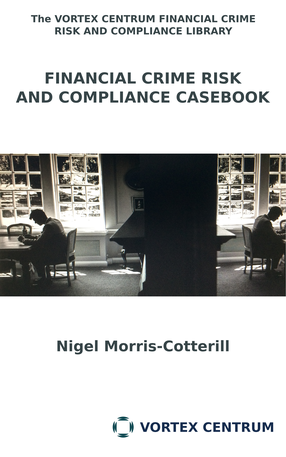
Read the full story of the bank that broke the island economy in The Financial Crime Risk and Compliance Casebook.
Paperback and personalised PDF
About this section
Opinion pieces or "Op-Eds" are the home-made bombs of the publishing world. So long as they meet editorial standards, are not intentionally offensive with a view to causing hurt or insult and are relevant to our field of endeavour, we will look at submissions.
We like contentious, we like contrarian views. We don't like pretty much any -ism . We recognise that Opinion pieces are one person's view and are not balanced (if they are balanced and reach a reasoned conclusion, they are probably more suited to the Articles section). We do not like acronyms and buzzwords.
Op-Eds are the author's personal views and do not necessarily represent the views of World Money Laundering Report or its publishers.
To submit an Opinion piece, please complete the Contact form.
